How to improve the safety of linkspans
Services: Pontoon & Linkspan Anti-Skid Surfacing
What is a linkspan?
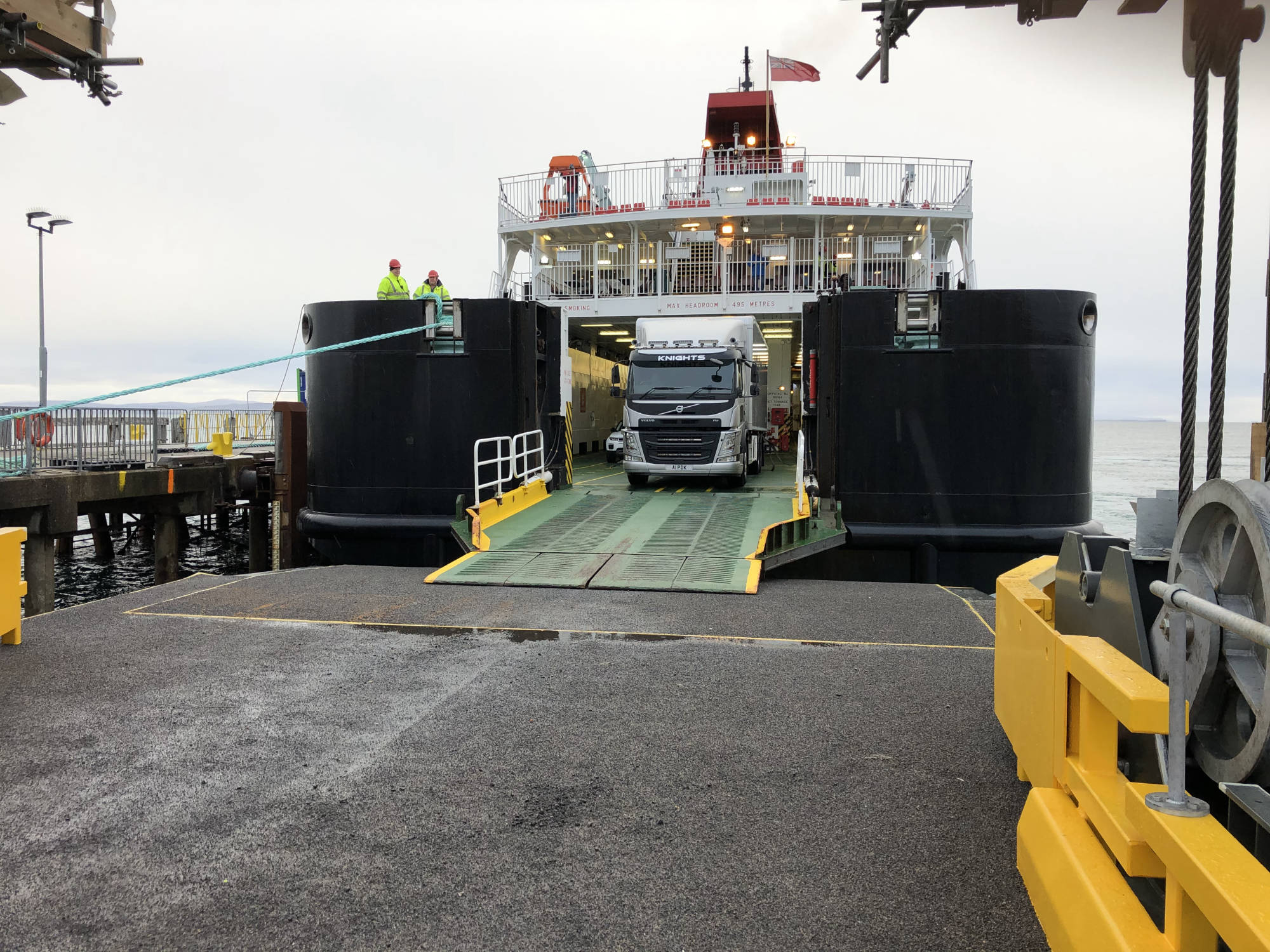
A linkspan, or link-span, is a specialised drawbridge primarily used for loading and unloading vehicles from roll-on/roll-off (RO-RO) vessels or ferries. It is especially crucial for accommodating tidal changes in water levels. Linkspans are typically installed at ferry terminals, where they facilitate the transfer of various types of vehicles, including cars, vans, trucks, and buses, from the vessel to the shore.
They can also be used to load and unload railroad cars, using ramps located at the stern, bow, or sides of the vessel. Given their exposure to the elements, frequent use, and the significant weight they bear, it is crucial to have a reliable, anti-slip surfacing material.
Linkspans first appeared in the 19th century when train ferries came into operation. As road transport increased in the 20th century, general-purpose RO-RO came into service.
Earlier designs of linkspans involved a ramp connected to the pier at one end and suspended above the water at the other, with its height controlled by hydraulic rams or cables – these designs struggled to accommodate varying tidal, wave and current conditions. Eventually, this was replaced by underwater tank linkspans, which use compressed air for height adjustment, often eliminating the need for tidal adjustment. The objective is to align the linkspan with the ferry’s car deck, allowing a ramp on the vessel to bridge the gap.
Linkspan design and safety
In 1994, the collapse of a new ship-to-shore passenger walkway in Ramsgate resulted in the death of six people. Since then, innovative designs and tougher regulations have provided guidelines for safer linkspans. The most significant action was the commissioning and drafting of the UK maritime structures code BS 6349, specifically addressing the design of ro-ro ramps, linkspans, and walkways (BSI, 2007).
Many aspects need to be considered during the installation and use of ship-to-shore links, including planning, design, installation and maintenance, all of which should adhere to the Construction Design and Management Regulations 2015(CDM Regulations).
Anti-skid application
One of the most crucial safety elements is the road and footway surface treatment, as outlined in BS 6349-8:2007. The risks associated with wear and tear of surfaces is hazardous in terms of corrosion via steel diminution or slipping and falling while transporting precious cargo, businesses or pedestrians.
Substrate preparation – Prior to application, the substrate should be prepared with enclosed captive blasting and a protective coat of anti-corrosive polyurethane primer.
Resin application – A fast curing polyurethane lightweight resin system is then applied evenly over the surface, while the resin is still wet aggregate is then applied to the surface to provide a non-slip texture. Some solutions require additional coats of resin and can take several hours to cure between each coat, however specialist surfacing solutions such as Bimagrip LS only require one application and can cure in as little as two hours, meaning that downtime is minimal.
Testing – Tests and inspections should be performed following the curing process to ensure the surface is evenly covered and confirm the required level of traction has been achieved.
WJ Marine employed this method to replace the ageing linkspans on Coll and Tiree with new structures designed to extend their service life and provide a reliable anti-slip system. The project, covering a total area of 550 sqm over two linkspans, was completed in two days. The remaining time was spent cleaning the surrounding area and site, ensuring successful and efficient projet delivery.
In conclusion, linkspans are vital for efficient vehicle loading and unloading on RO-RO vessels, with modern designs improving their adaptability and safety. Enhanced regulations and advanced materials, such as anti-slip systems, ensure their reliability and longevity. Proper maintenance and upgrades, like those performed by WJ Marine, are essential for minimising disruptions and extending the service life of these critical maritime structures.