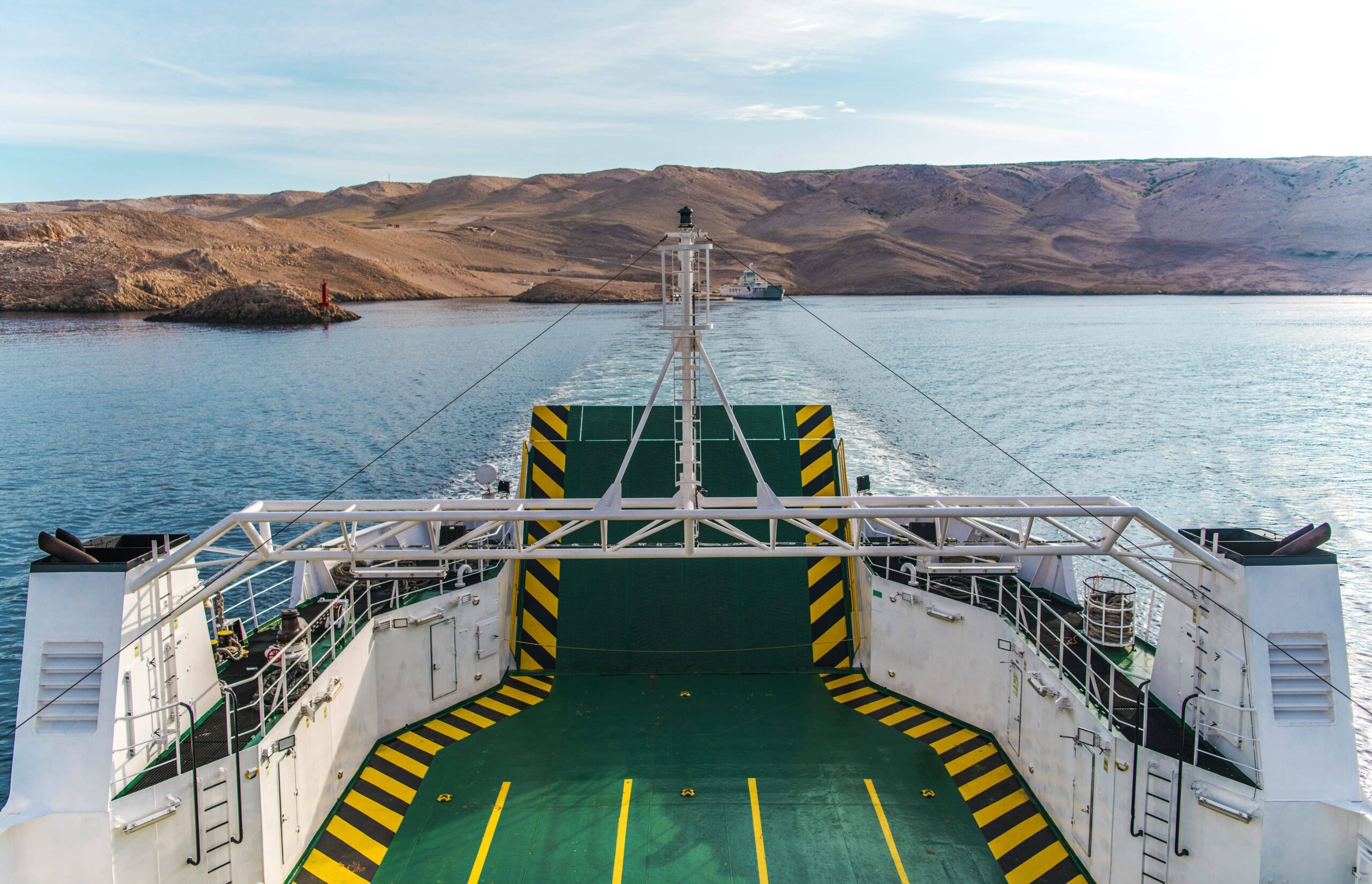
Anti-Skid Surfacing in the Maritime Sector: A Practical Perspective

Services: Non Slip Marine Deck Applications
Anti-Skid Surfacing in the Maritime Sector: A Practical Perspective from WJ Marine
In the maritime industry, safety is non-negotiable. With over 50,000 merchant vessels at sea on any given day and millions of tonnes of cargo moving through ports globally, reliable, high-performance deck surfacing is critical. One key contributor to safe operations is anti-skid surfacing – applied not just on ship decks, but also on the linkspans, pontoons, and ramps that form the backbone of port infrastructure.
To explore the role of anti-skid surfacing in both shipping and port environments, we spoke to Harry Cowles, Marine Manager at WJ Marine. With over a decade of experience in construction, operations, and marine infrastructure, Harry shares insight into how WJ Marine approaches surface preparation and anti-skid systems to keep both vessels and port operations moving safely and efficiently.
Meeting Marine and Port-Side Demands
Anti-skid surfacing plays a vital role wherever vehicles, cargo, or passengers are moving across metal decks – be it on a vessel, a pontoon, or a linkspan. These are high-impact environments. Onboard ships, we’re dealing with vehicle ramps, stern decks, and cargo zones. In ports, it’s the transitional infrastructure—linkspans and pontoons—where stevedores are loading and unloading cargo at pace, often driving heavy or unwieldy vehicles in tight spaces.
These surfaces experience constant traffic. Stevedores drive over them hour after hour during loading operations. Add sea spray, weather exposure, and cargo movement, and surface grip becomes not just a feature, but a critical safety measure.
Removal and Surface Preparation
Often, WJ Marine is called in to remove a failed or aged anti-skid system and install a new, compliant surface. This is particularly common where previous coatings have worn down, delaminated, or failed to meet safety or fire regulations.
Our process begins with surface removal. Depending on the existing material, we use a combination of planing, stripping with bobcat-mounted attachments, or scarifying to take the system back to the base steel or concrete. Our fleet includes equipment specifically tailored for heavy-duty marine work, ensuring that large areas can be addressed efficiently.
Next, we prepare the surface using captive shot blasting, typically to SA 2.5 standard, to ensure strong mechanical adhesion for the new resin system. Where previous materials are particularly stubborn or degraded, we deploy our specially adapted jet dryers – originally developed for Highways use – which can be used to heat the surface and soften older resins, making removal significantly faster and cleaner.
This attention to detail in preparation not only ensures long-term durability of the new coating but also reduces the risk of system failure, delamination, or water ingress later in the product’s life.
System Composition and Application
WJ Marine uses a high-friction system built around cold-applied polyurethane resin and hard-wearing aggregates such as emery or calcined bauxite. These materials are selected for their hardness (Emery ranks 9 on the Mohs scale) and resilience under pressure. The resin acts as a flexible but durable binding layer, absorbing some of the vibration and movement typical of marine and dockside steel structures.
The anti-skid surface is built up using resin and aggregate, with careful attention paid to thickness and aggregate coverage. On occasion, WJ Marine applies a double-layer system for enhanced durability and resistance in high-wear areas.
Adapting to Environments
Working in maritime environments requires adaptation—not only to different substrates like steel and concrete, but also to local conditions. In hot climates like Bulgaria, WJ Marine shifts working hours to cooler times of day. In cold conditions like Lithuania, portable heaters are deployed to ensure steel decks reach the required application temperature.
On the port side, WJ Marine has adapted its Highways-based resin truck to suit dockside operations. With shortened mix times and increased batch capacity, this vehicle can mix and supply multiple anti-skid systems simultaneously, reducing downtime and enabling WJ Marine to meet tight project windows.
When wet conditions threaten delays, WJ Marine uses jet dryers—adapted from aircraft engines—to rapidly dry and preheat surfaces. These can dry up to 1,500m² per hour, giving the team the flexibility to continue working safely even in damp conditions.
Managing Operations Without Compromise
One of the key logistical challenges in portside surfacing is maintaining operational access during works. Linkspans, in particular, are critical access points—often the only route for loading and unloading large Ro-Ro vessels. Shutting them down entirely is rarely an option.
To avoid disruption, WJ Marine works with clients to plan phased applications, resurfacing one side of a linkspan or pontoon at a time. This allows controlled, stop-and-go traffic management during the project, enabling port operations to continue without compromising safety. This collaborative approach ensures vessels remain accessible and operational, even during high-traffic periods.
Maintenance and Longevity
Maintenance for anti-skid systems is simple but essential. Regular washing with water or pressure washers keeps surfaces clean and functional. As traffic builds up—whether from port vehicles or onboard machinery—these surfaces can become contaminated with oils or cargo residues, which reduce grip.
Surfaces should be inspected regularly and especially during scheduled dry dockings (typically every 3–5 years) or during planned layovers. WJ Marine can also supply riding crews to carry out works while vessels remain operational.
Critically, WJ Marine advises against overlaying new anti-skid systems on failing surfaces. Instead, old systems should be removed, and the steel substrate inspected and prepared before any new surfacing is applied, ensuring structural integrity and avoiding unnecessary weight on the deck.
Standards and Best Practices
All WJ Marine anti-skid systems meet Lloyd’s Register fire-resistance requirements and are rigorously tested before and after application. Key environmental and operational factors—humidity, surface temperature, and dew point—are monitored to ensure proper curing and long-term durability.
With modified blasting machines for chevron ramps and raised lashing points, WJ Marine has also tailored its prep equipment to ensure even complex deck geometries receive full treatment, without reverting to open blasting.
Evolving Demands and Technologies
Trends in marine safety are shifting toward more sustainable and high-performance systems. Polyurethane-based systems are being favoured for their flexibility and long life. In line with sustainability goals, WJ Marine uses Bimagrip—a durable system with low, whole-life carbon cost. At end-of-life, it’s classed as inert waste and is non-hazardous, simplifying disposal.
WJ Marine is also seeing growing demand for in-transit and layover applications—work carried out while the vessel remains operational. With the right sequencing, coatings can be stripped, prepared, and reapplied in short windows, without requiring dry docking.
Final Word
Anti-skid surfacing is fundamental to the safe and efficient operation of marine and port environments. Whether supporting heavy stevedore traffic on a linkspan bridge or reducing braking distances on a car deck, the right surface system keeps people, vehicles, and cargo safe.
WJ Marine brings specialist knowledge, purpose-built equipment, and a flexible, responsive approach to every project—whether it’s in port, at sea, or somewhere in between.