Enhancing the safety of pontoon bridges
Services: Pontoon & Linkspan Anti-Skid Surfacing
What is a pontoon bridge?
Pontoon bridges, also known as floating bridges, offer a practical and cost-effective lightweight solution for both pedestrian and vehicle travel across water bodies. These bridges are supported by large, watertight concrete floats, boats, or other buoyant structures that are rigidly connected end-to-end, providing a continuous and stable deck.
The pontoon floats are connected to form a stable foundation upon which the road deck is built. This construction method ensures durability and stability, even under varying water conditions.
The concept of pontoon bridges dates back to Ancient China, with historical records also indicating their use in Ancient Greek and Roman times. During the Middle Ages, pontoon bridges were frequently employed for military purposes due to their tactical advantages.
Advantages of pontoon bridges
Emergency and Tactical Use: Pontoon bridges are invaluable during emergencies such as natural disasters or wartime conflicts. They provide a rapid and flexible solution for restoring connectivity when traditional bridge construction is either impractical or too time-consuming.
Cost-Effective Alternative: When conventional bridge construction is deemed cost-prohibitive, pontoon bridges offer a financially viable alternative. Their construction and deployment are often quicker and more economical.
Flexibility and Adaptability: Pontoon bridges can be designed to allow for elevation changes or removal to accommodate waterway traffic, providing significant operational flexibility. This adaptability makes them suitable for various maritime and coastal infrastructure projects.
Disadvantages of pontoon bridges
Pontoon bridges are modular and easily extendable, offering a cost-effective and rapidly deployable solution. However, their susceptibility to weather and traffic damage can result in higher maintenance costs.
Weather can also affect the anchoring of pontoon bridges as they must cater for the rise and fall of water levels.
Due to the movement associated with the pontoon bridge, they often require more maintenance than traditional structures, even under normal conditions. Ports with heavy traffic and quick turnaround of cargo and passengers will be exposed to wear and tear over time. To prolong the quality and efficiency of pontoon bridges, regular maintenance, application of anti-skid surfacing, and expert guidance are required to optimise performance and ensure commercial operations run smoothly.
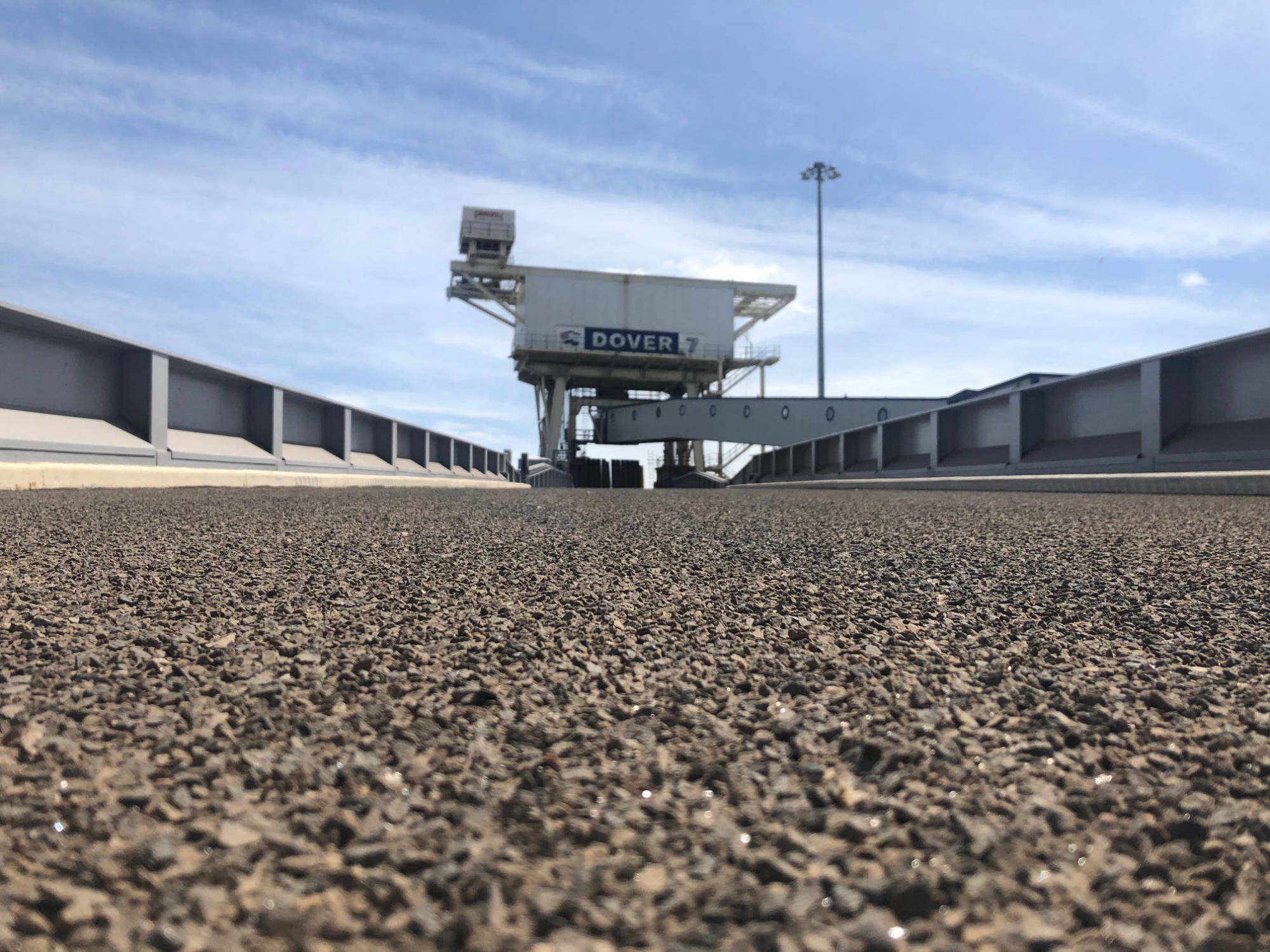
To withstand the effects of weather, frequent use, and heavy loads on linkspans and pontoons, the surface must be coated in durable and reliable anti-slip surfaces.
Assessing your surfaces
Before the application of anti-skid surfacing a port maintenance engineer will inspect the bridge, looking for any decay to the polishing of anti-skid surface, delamination, or water ingress. A poorly maintained surface will increase the likelihood of trips and reduce traction for vehicles, increasing the risk of accidents and increasing commercial liability. More so, a damaged surface will lead to water ingress, where water will leak and cause freeze-thaw. The domino effect of damaged surfaces, leading to bigger problems means larger costs over time in repairing steel diminution. That’s why regular maintenance is the most efficient way to manage your pontoon bridge.
Anti-skid tools and equipment
One of the most important elements of anti-skid application is time and quality. It’s important to ensure that turnaround time can compete with the demanding schedules of the maritime industry to ensure operations can run smoothly. This involves utilising our small and large ride-on machines that can efficiently cover and prepare surface areas to a high standard quickly. Once the surface is inspected, heavier defective coating may need to be removed back to steel and treated via captive blasting. Or is carried out to remove lighter coatings efficiently and prepare the surface for proper adhesion. improperly cured surfaces or steel not treated efficiently will corrode faster meaning an increase to maintenance costs.
It’s also important to consider how heavy coatings can be removed quickly, WJ Marine operates three of the only vehicle-mounted jet surface dryers in the UK, with its unique jet aircraft technology. This aids faster removal of heavy coatings by heating up the surface before being stripped mechanically with our own bobcat skid steers back to the original steel substrate.
The jet surface dryer is also capable of drying up to 1,500m2 in just one hour, with a drying path of two metres if inclement weather has been forecast or in wet weather months.
Polyurethane is highly effective as an anti-skid surface coating due to its durability, flexibility, and resistance to weather and chemicals. It maintains strong adhesion to various substrates like concrete, metal, and wood, ensuring a robust, long-lasting surface. Easy to apply and maintain, polyurethane remains effective under heavy traffic and harsh environmental conditions, making it an ideal choice for ensuring safety and reliability on surfaces such as pontoon bridges.
Pontoon bridges and Linkspans are a practical, cost-effective solution for crossing water, offering stability and flexibility. However, they require regular maintenance due to weather and traffic damage. Proper upkeep of anti-skid surfaces with durable materials like polyurethane resin antiskid systems are essential for safety and longevity. Prioritising maintenance ensures these bridges remain reliable and safe.